BL Innovare · Touchless vehicle inspection
FASTLIGN: touchless alignment check
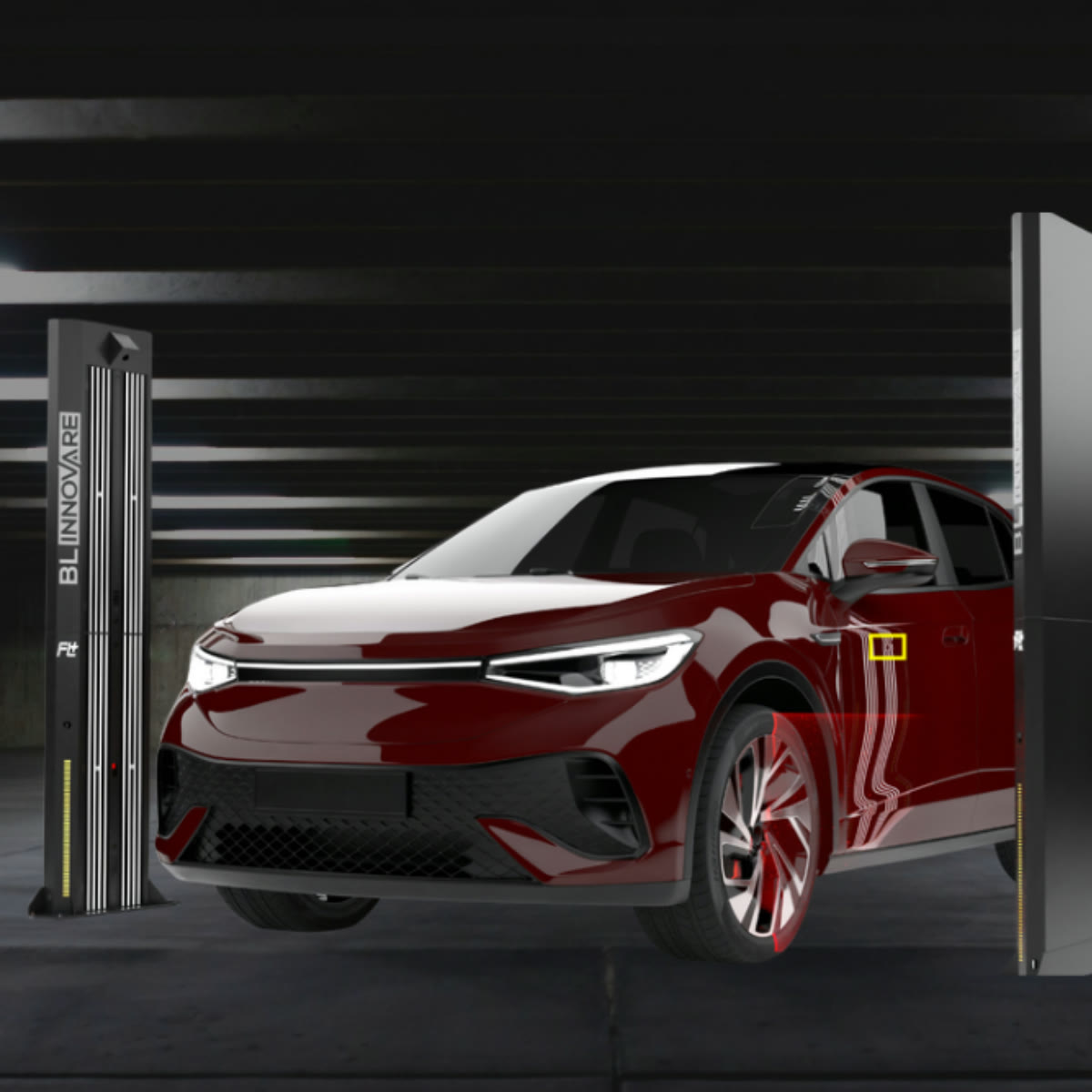
FASTLIGN builds on the BODYGUARD platform, adding alignment detection to the automated check-in inspection. Vehicles are screened in about three seconds as they enter the lane, with no clamps, no targets and no stopping.
Enquire about FASTLIGNSee FASTLIGN in the lane
A full walkthrough of the touchless alignment check: the vehicle rolls through the lane, integrated lasers and cameras capture thousands of readings, and the service advisor has a result in about three seconds.
Why wheel alignment matters
The case to put in front of a customer: what misalignment does to tyre wear, fuel use and handling, and why it is worth checking on every vehicle rather than only the ones that are pulling.
The return on a FASTLIGN lane
How the numbers stack up once every vehicle entering the lane is checked automatically, and the alignment work that was previously invisible starts being identified and quoted.
Why it matters at intake
- Missed opportunities. Alignment issues are hard to spot visually, so service work goes unidentified at intake.
- Inconsistent inspections. Results vary when checks depend on staff time and experience.
- Reactive customer conversations. Without check-in evidence, disputes are harder to manage.
How the inspection works
- Vehicle enters. The inspection begins automatically on arrival.
- Scan in three seconds. Service needs are revealed in as little as three seconds.
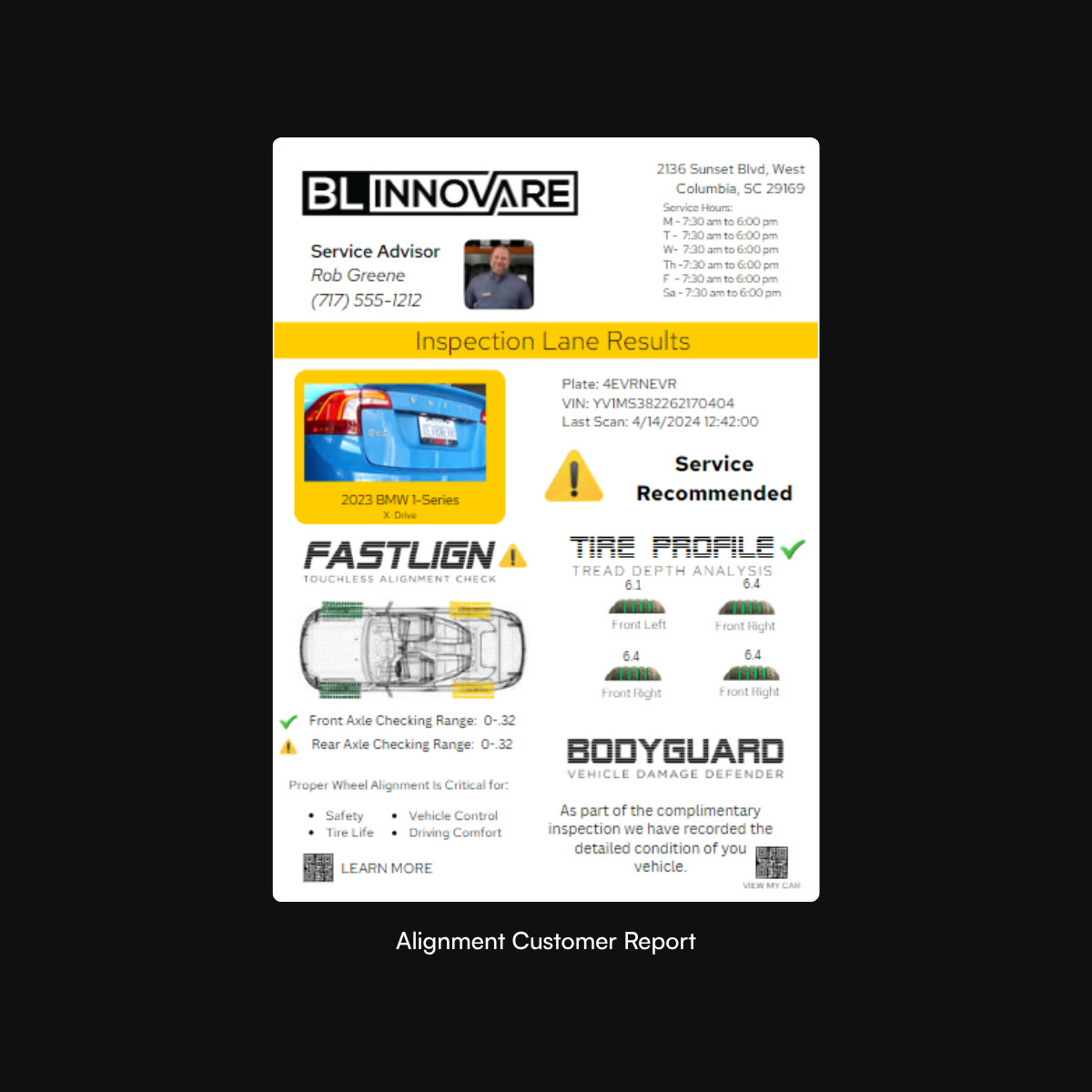
- Instant report. A report is generated immediately, keeping the lane moving.
- Maximise upsells. Inspection data turns into service opportunities.
Pass, warning or fail
FASTLIGN returns a clear alignment result with per-wheel readings in degrees, so the conversation with the customer starts from data rather than opinion.
| Result | What it means |
|---|---|
| Pass | Alignment is in good shape. |
| Warning | The vehicle is starting to drift out of spec. |
| Fail | One or more wheels are out of alignment. |
FASTLIGN Evo or FASTLIGN Plus
Evo covers core alignment screening. Plus adds full exterior imaging on top of everything in Evo.
| Capability | FASTLIGN Evo | FASTLIGN Plus |
|---|---|---|
| Core alignment screening | Yes | Yes |
| Instant alignment insight | Yes | Yes |
| Automatic vehicle identification | Yes | Yes |
| Seamless reporting | Yes | Yes |
| Lower body panel scanning | Yes | Yes |
| Full exterior imaging, 10 cameras, 360 degrees | — | Yes |
| Smart lighting technology | — | Yes |
| Complete damage documentation | — | Yes |
What a 360-degree scan picks up
- Front and upper body: hail damage, broken mirrors, windscreen damage, broken headlights.
- Side body and wheels: chassis damage, dents and scratches, tyre wear, wheel alignment, wheel rash.
- Rear body and lights: faulty tail and brake lights, fuel tank and EV battery damage.
- Underbody and mechanical: exhaust damage and modifications, worn suspension, oil leaks.
Optional modules
- AI Damage Detection. Identifies dents, scratches and other body damage automatically, with instant reports.
- ACUTREAD tyre tread scanner. High-precision laser tread depth measurement as the vehicle passes through.
- Overhead cameras. 4K top-down imaging of roof, bonnet, boot and upper body.
- Under carriage imager. High-resolution images of the underside, for leaks, wear and missing components.
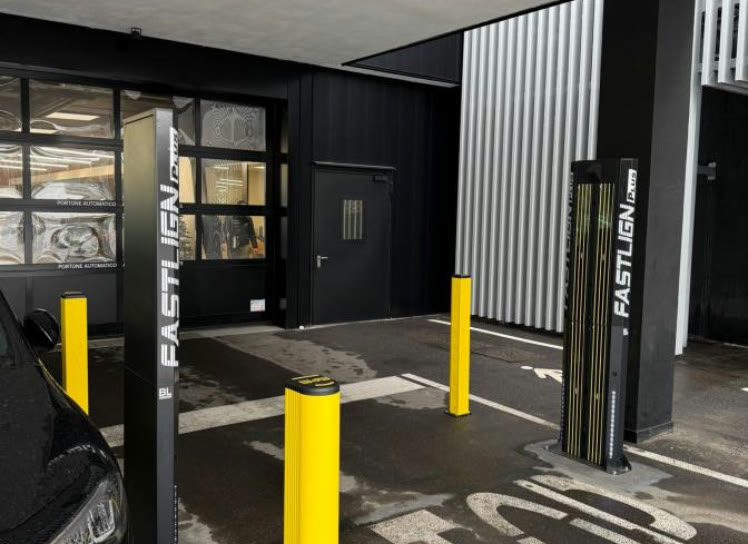
- Additional camera pods and tower height extensions for larger vehicles and different site layouts.
- Inspection tunnel structure. A modular turn-key tunnel built to integrate with the camera and lighting system.
Inspection ONE
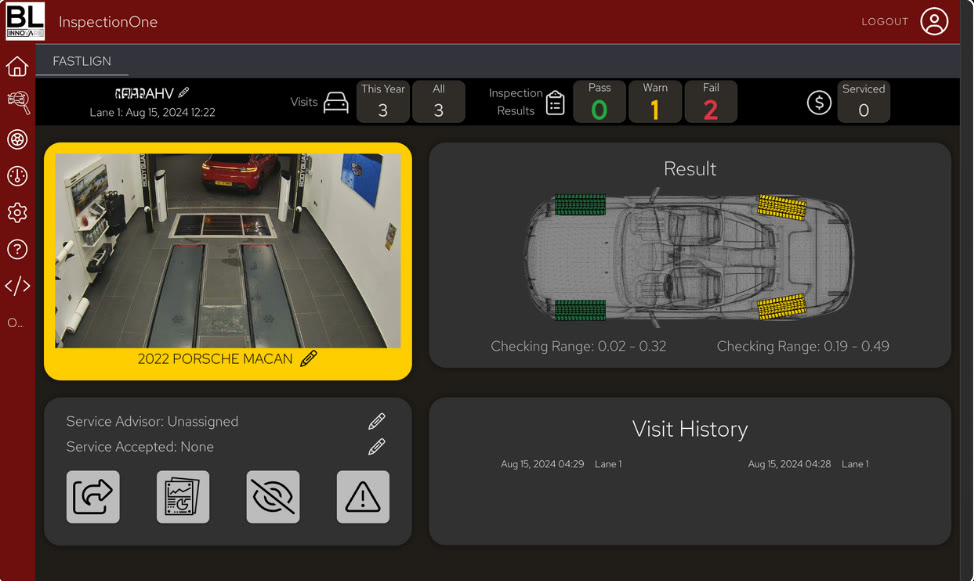
All inspection results feed into Inspection ONE, a single platform that centralises inspection lane data. One platform, one report, complete visibility. Reports can be printed or shared electronically with the customer.
Installation and project delivery
Standard installation through UNIPAC covers mechanical installation of the base system, setup and commissioning, operational testing, on-site staff training, and coordination with your electrician or IT contact.
Quoted separately: installation of optional modules, freight, technician travel and accommodation, electrical and data works, and any civil or structural work. Most customers use their own site electrician, and we provide the electrical and data requirements up front.
Common questions
Does the vehicle have to stop?
No. FASTLIGN screens the vehicle as it drives into the lane.
How long does the check take?
Around three seconds.
What is the difference between FASTLIGN and BODYGUARD?
BODYGUARD is the inspection platform. FASTLIGN is BODYGUARD with alignment detection added.
Can it handle larger vehicles?
Yes. Extended height and width options are available for trucks and commercial vehicles. We confirm the requirement during site assessment.
Can it connect to our dealership systems?
Yes, through the FASTLIGN API. Integration with compatible DMS and ERP platforms can be scoped on request.
Talk to UNIPAC about FASTLIGN
Tell us about your service lane and we will confirm the right configuration, the site requirements and what installation involves.
Request a quote