
An inspection lane photographs the whole vehicle as it arrives, so the condition record exists before anyone has walked around the car, and on a FASTLIGN lane it checks the alignment too. Here is what it captures, why most service workshops choose FASTLIGN, what the service desk does with the report, and what to think through before one goes in.

The short answer
Automated vehicle inspection uses a fixed lane of cameras and lighting to record a car's condition as it drives in. A single pass captures the body, glass, lights, wheels and tyres in still images and 4K video from multiple angles, and produces a report the service advisor can read before the customer reaches the desk. FASTLIGN, the system most service workshops choose, also screens wheel alignment on the way in; tyre tread depth and an underbody view are optional modules on either system.
Worth knowing
Most workshops check a vehicle in the same way: an advisor or technician walks around it, notes anything obvious on a form or a tablet, and moves on. It works when the lane is quiet and the person doing it has time. It works less well at eight o'clock on a Monday with a queue at the door.
Four problems come up again and again in that process, and they are the ones a touchless lane is built around.
Who this is for
Dealer principals, service managers and fleet or facilities managers who have heard about automated check-in and want to know what it actually does before they talk to anyone about buying one.
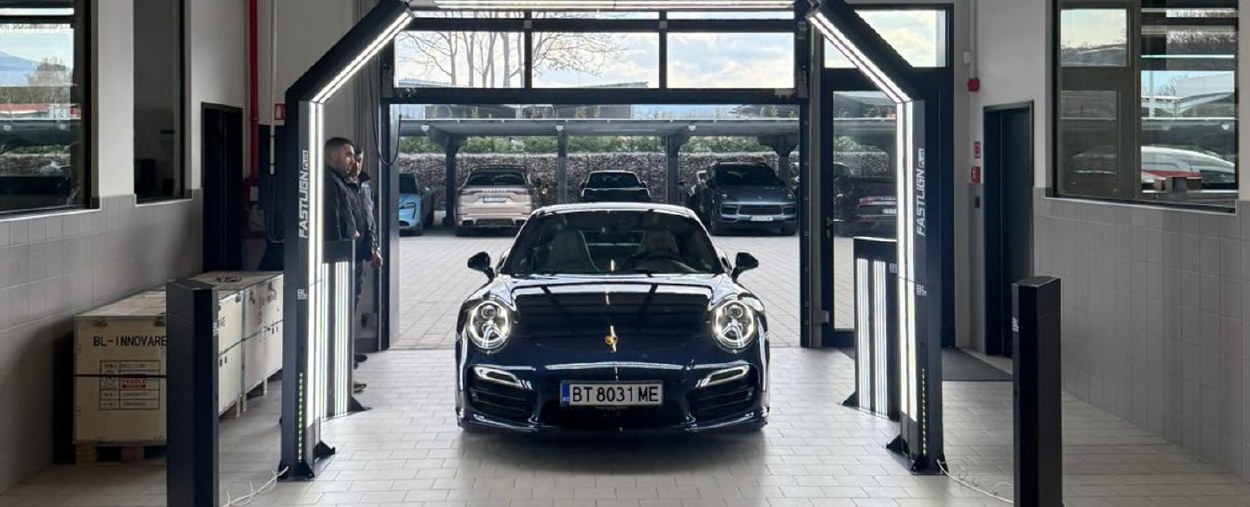
An inspection lane is a fixed structure the vehicle drives through on its way into the workshop. Camera towers sit either side, with integrated lighting so the images stay clear and consistent from one car to the next, and additional lighting pods are available so the documentation holds up in low light. Nobody has to stop the car, open a door or hold a tablet.
The sequence is short. The range UNIPAC supplies, BL Innovare's touchless inspection systems, inspects a vehicle in as little as three seconds as it drives through, using six or ten camera angles depending on the configuration, and on a FASTLIGN lane it checks the alignment with a laser at the same time. Those figures are the manufacturer's, as stated on that page. Alongside the still images, the lane records 4K video of the car from multiple angles.
Wondering where a lane would fit on your site?
A site assessment looks at your entry route, your vehicle mix and the power and data available, and confirms the layout before anything is ordered.
The range comes as two systems, and the difference between them is simple. BODYGUARD records the condition of the bodywork and wheels. FASTLIGN does everything BODYGUARD does and also checks wheel alignment as the car drives in. Alignment cannot be added to a BODYGUARD lane later, so it is a decision to make at the start.
For a service workshop, FASTLIGN is usually the one that pays its way. Most dealership and service workshops already have an alignment machine, and finding alignment work at check-in, before the car is in a bay, is the most direct way a lane adds to the day's work. Damage documentation is valuable too, but in a workshop that does not do dent or wheel repairs in house, it works more like an insurance policy against disputes than a source of new work.
Everything else is common to both. The tyre tread depth scanner, the undercarriage imager, overhead scanning, extra camera pods and taller towers for higher vehicles can be added to either system.
| BODYGUARD | FASTLIGN | |
|---|---|---|
| Body and wheel condition record | Yes | Yes |
| Wheel alignment at check-in | No, and it cannot be added later | Yes, pass, warning or fail |
| Tread depth, undercarriage, overhead and height options | Available | Available |
| Best suited to | Sites where damage documentation is the main need | Service workshops with an alignment machine |
A 360 degree pass splits the vehicle into four zones. The table below lists what the manufacturer says each zone picks up, and why each one matters to the person at the service desk.
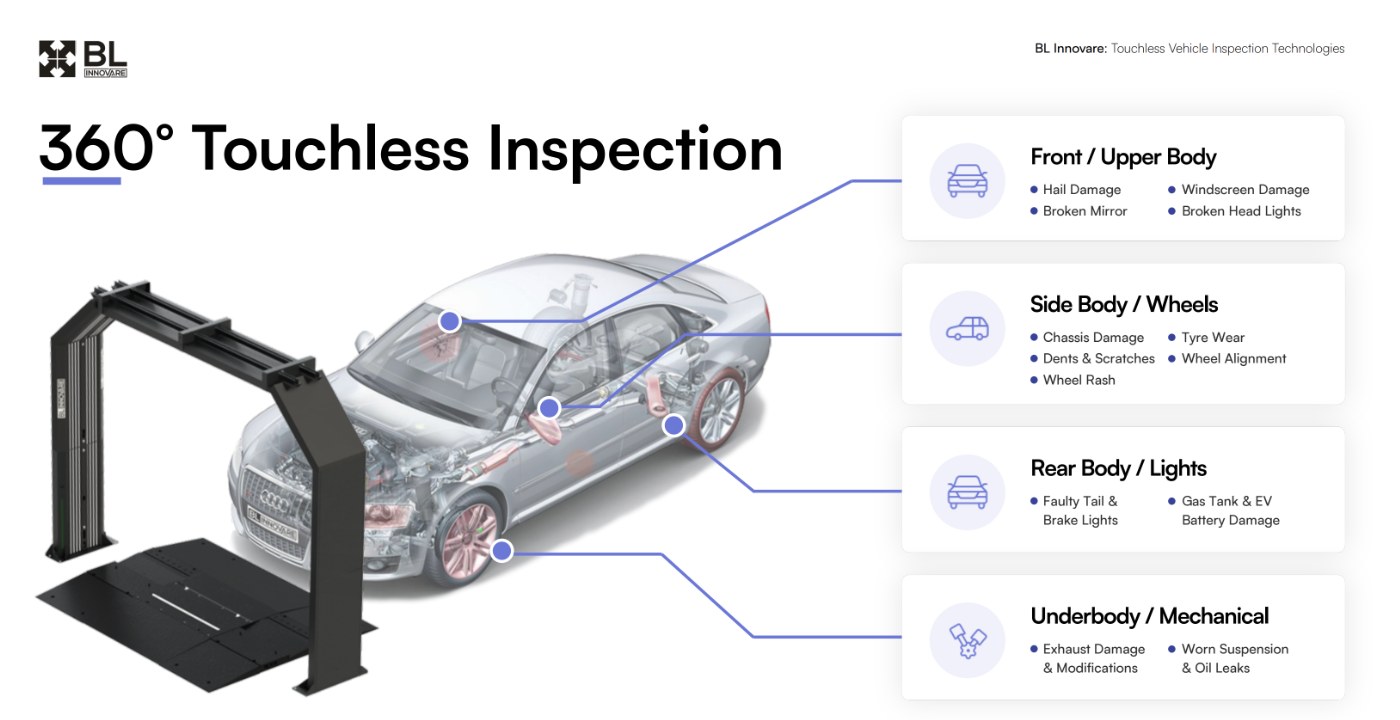
| Zone | What the lane records | Why it matters at the desk |
|---|---|---|
| Front and upper body | Hail damage, broken mirrors, windscreen damage, broken headlights | Glass and hail damage are expensive to argue about later, and easy to miss on a quick walk-around |
| Side body and wheels | Chassis damage, dents and scratches, tyre wear, wheel rash, tyre tread depth where the tread depth scanner is fitted, and wheel alignment on a FASTLIGN lane | Wheel rash and tyre wear are the classic pick-up disputes, and also a natural conversation about tyres |
| Rear body and lights | Faulty tail and brake lights, fuel tank and EV battery damage | A failed brake light is a safety item the customer will want to know about before they leave |
| Underbody and mechanical | Exhaust damage and modifications, worn suspension, oil leaks, where the undercarriage imager is fitted | These are the findings nobody sees on a kerbside check, because nobody gets under the car at check-in |
The body and glass record is the part most workshops picture first: a set of clear, dated images of every panel, taken under the same light every time. It does not replace a technician's judgement about a repair. What it removes is the gap between "I think that dent was there" and a picture that shows it was. The lane also records 4K video from multiple angles, so there is more than a single frame to go back to.

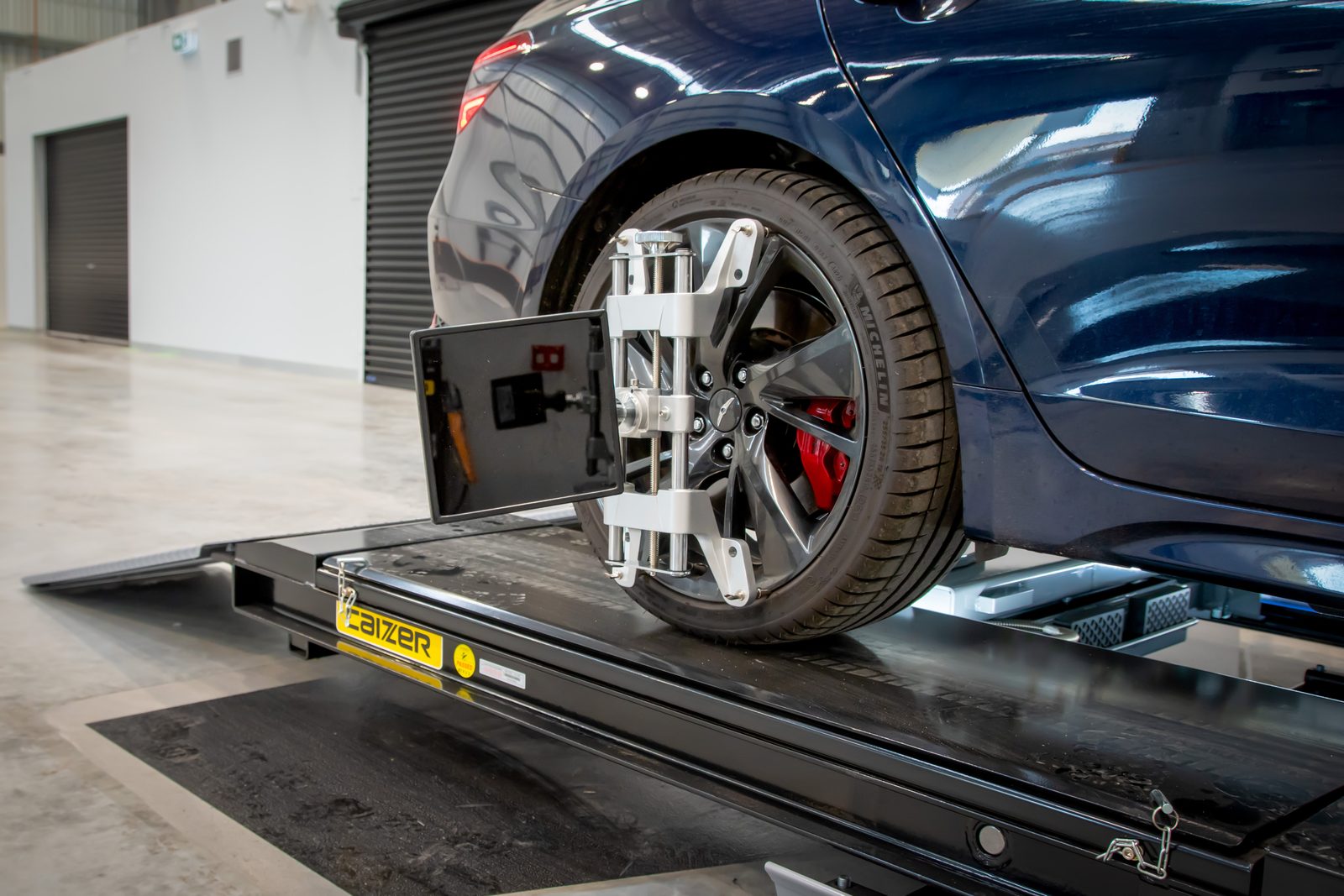
Wheels and tyres sit close to the camera line, so scuffs, wheel rash and visible tyre wear show up clearly. Alignment is different: it cannot be judged from a photograph, which is why it comes with FASTLIGN rather than from the cameras. FASTLIGN screens each car on the way in and gives a pass, warning or fail result.
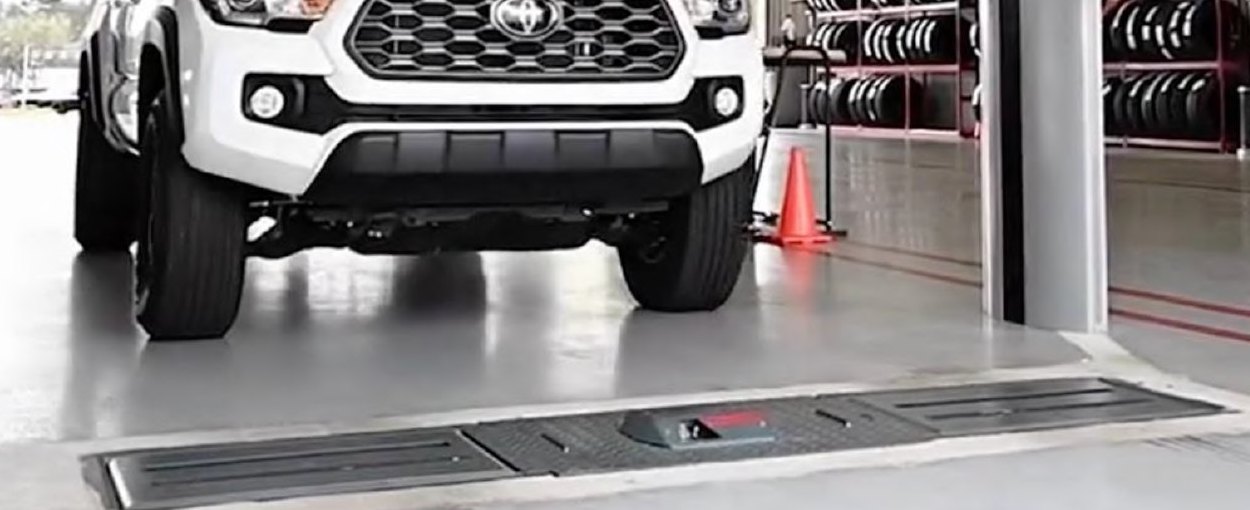
Tyre tread depth works the same way. The optional tyre tread depth scanner, available on either system, sits in the floor of the lane and measures the tread on all four tyres as the car drives over it, so the reading is in the first report the advisor sees.
That timing is the point. Without the lane, low tread and alignment problems usually come to light mid-service, when a technician notices uneven wear with the car on the hoist. By then the customer has left, and the work has to be raised in a phone call partway through the day, which does not always land. With the reading in front of the advisor at drop-off, it is a conversation at the desk instead. A car flagged for alignment still needs a full alignment on proper equipment.
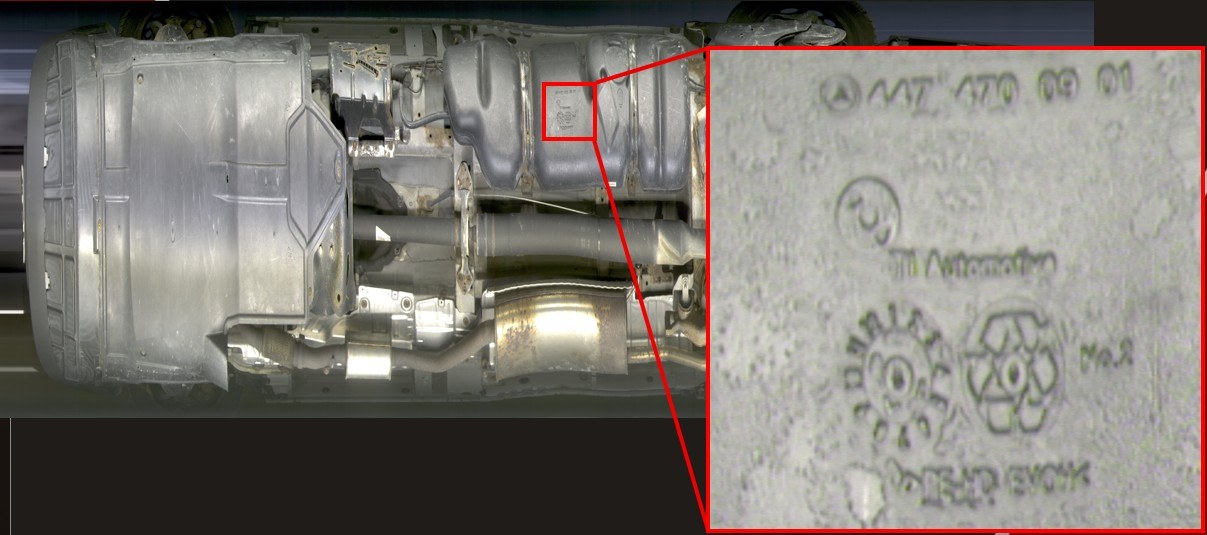
An undercarriage imager, an optional module on either system, adds a view nobody gets at the front door: exhaust damage, leaks and worn suspension components. These are findings that would otherwise wait until the car is on a hoist, if they were looked for at all. The image is sharp enough to read part markings on the underbody.
The practical change is timing. With a manual check, the advisor learns about the car while the customer is standing there, or later when the technician reports back. With a lane, the record exists first.
Results sit in one software platform, Inspection ONE, so every inspection for every vehicle is in the same place and can be printed or shared electronically with the customer. That matters for three conversations.
A dated image of the car on arrival is the simplest answer to a damage dispute. The advisor can point out a chipped windscreen or a scraped wheel at drop-off, note it on the job, and send the customer a copy. If something is raised at pick-up, both sides are looking at the same record.
Worn tyres, a failed brake light or an alignment flag are all things the customer would usually rather hear about while the car is already booked in. Raising them at drop-off, with the image or the reading in front of them, is a different conversation from calling the customer mid-service to ask for approval. Showing them the evidence makes the recommendation easy to understand and easy to decline. How much of that turns into extra work depends on your customers and your team, and no lane can promise a figure.
Because every result is stored the same way, a service manager can look across the lane as well as at one car: how many vehicles came through, how many were flagged for what, and what was offered. That is management information a paper walk-around form never produces.
Neither approach removes the need for skilled people. The difference is in what is captured, how consistently, and what is left for staff to do.
| Manual walk-around | Automated inspection lane | |
|---|---|---|
| Consistency | Depends on who does it and how busy the lane is | The same capture on every vehicle that goes through |
| Coverage | What can be seen standing beside the car | All four zones, including the underbody where that module is fitted |
| Record | A form, a few phone photos, or memory | A dated set of images and 4K video, with a report stored in one place |
| Alignment | Often found only mid-service, when a technician spots uneven tyre wear with the car on the hoist | Screened at check-in on a FASTLIGN lane, with a pass, warning or fail result |
| Tyre tread | Checked once the car is in a bay, and raised in a phone call if worn | Measured on all four tyres at check-in where the tread depth scanner is fitted |
| Staff role | Capturing the information and explaining it | Reading the report and explaining it |
A lane only records the cars that drive through it, so the biggest planning decision is where it sits. If the site allows it, the scanner goes in the service drive-through, where cars are checked in, and customers drive through it themselves. If it does not, the lane sits at the entrance to the workshop and the service advisor or a technician drives each car through.
Either way, the scan shapes what happens next. What it finds, and what the advisor agrees with the customer at the desk, decides which bay the car goes to and what work goes on the job card.
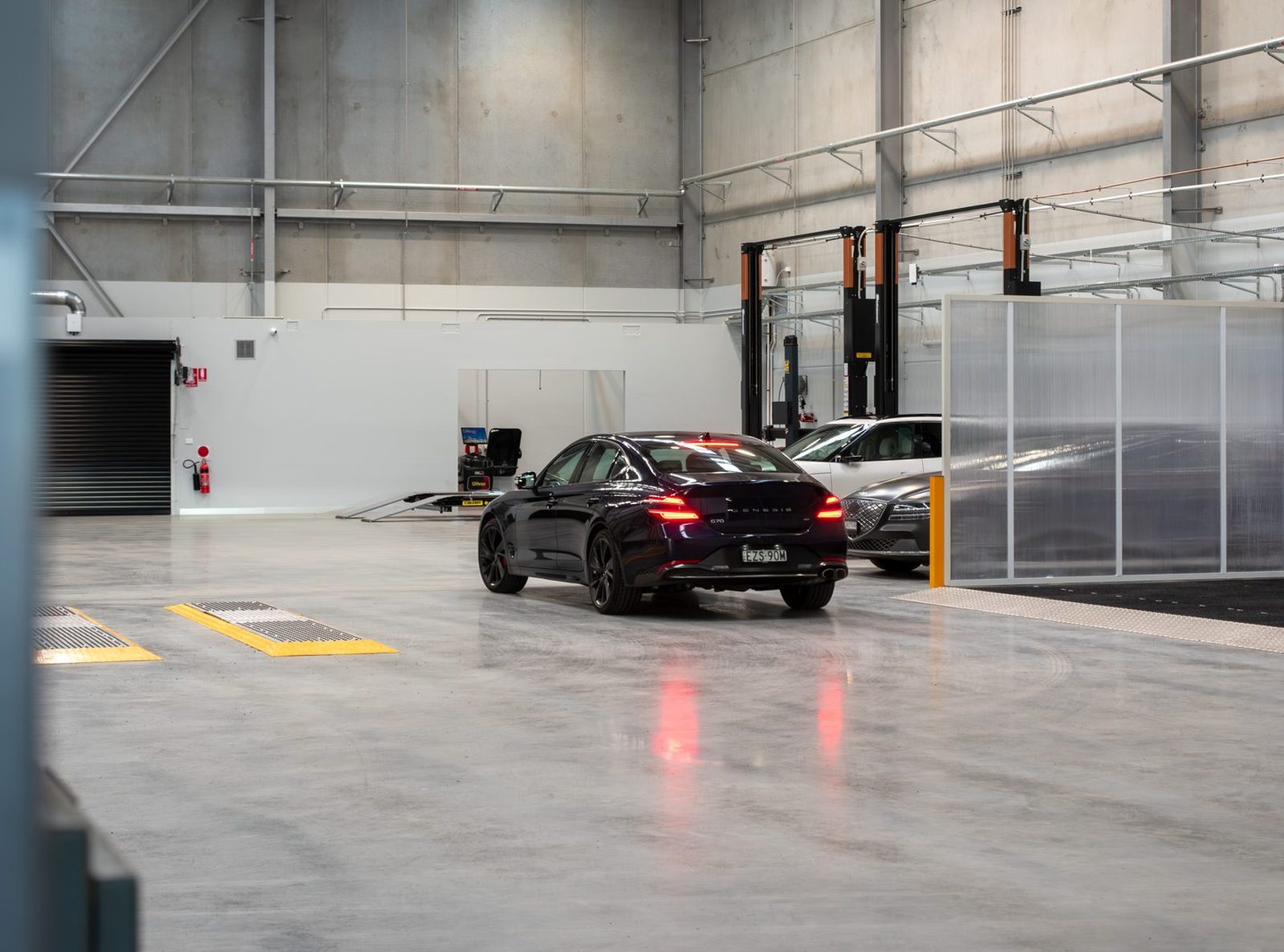
Look at how cars arrive today. Where do customers queue, where do they stop, and where do staff take over the car? The drive-through check-in is the natural home for a lane because every service vehicle already passes through it, close enough to the reception that the report is ready before the customer walks in.
Think about the vehicles as well. Vans, utes with racks and taller fleet vehicles may need a taller or wider configuration, and the range includes indoor and outdoor versions. Your vehicle mix is one of the first things to bring to a site assessment.
Ideally the customer drives through the lane on arrival, so the record is of the car exactly as they delivered it. Not every site allows that. Where the layout means customers cannot drive through the scanners, the service advisor or a technician drives the car through after drop-off, and the customer can be sent a text message with a link to the report within minutes.
If staff do the drive-through, say so at the desk. Something as simple as "We'll be doing a complimentary scan on your car, and you'll get a text shortly with a link to the report" sets the expectation.
Staff driving has one advantage for alignment screening. Someone who knows the car is being scanned tends to drive in straight, which gives more consistent alignment readings than a customer who does not.
A lane adds a defined vehicle path to an area where customers and staff are often on foot. Safe Work Australia's general guide to workplace traffic management notes that most workplace vehicle incidents involve collisions between pedestrians and vehicles, and that customers and visitors can be at risk too. Its suggestions include separate entries and exits for people and vehicles, barriers at building entrances and marked pedestrian areas.
That guide is guidance material, not a rule book, and Safe Work Australia is a policy body rather than a regulator. Treat it as a starting point, and confirm what applies to your site with your state work health and safety regulator.
Camera towers need power and a data connection to reach the software, and an outdoor lane may need civil or structural work. The electrical and data requirements come from the manufacturer's specification for the chosen configuration, and your electrician and IT contact need to be involved early, before anything is ordered. Nothing about the site should be assumed from another workshop's installation.
An inspection lane is a camera system, and it can capture more than the car: number plates, drivers through the windscreen, and staff walking past. It is worth working through the privacy side before the lane is switched on, not after.
The Office of the Australian Information Commissioner's page on security cameras says that where the Privacy Act covers an organisation, personal information it collects through a surveillance device must comply with the Australian Privacy Principles, and that state and territory surveillance laws also apply.
Workplace surveillance of employees is covered separately by state law. In New South Wales, for example, the Workplace Surveillance Act 2005 deals with camera surveillance of employees, including notice to staff. Rules differ between states, so check the law where your workshop is and take advice if you are unsure.
The hardware is the easy part to buy. The part that decides whether a lane earns its place is the process around it. Before installation, agree the answers to a few questions with the service team.
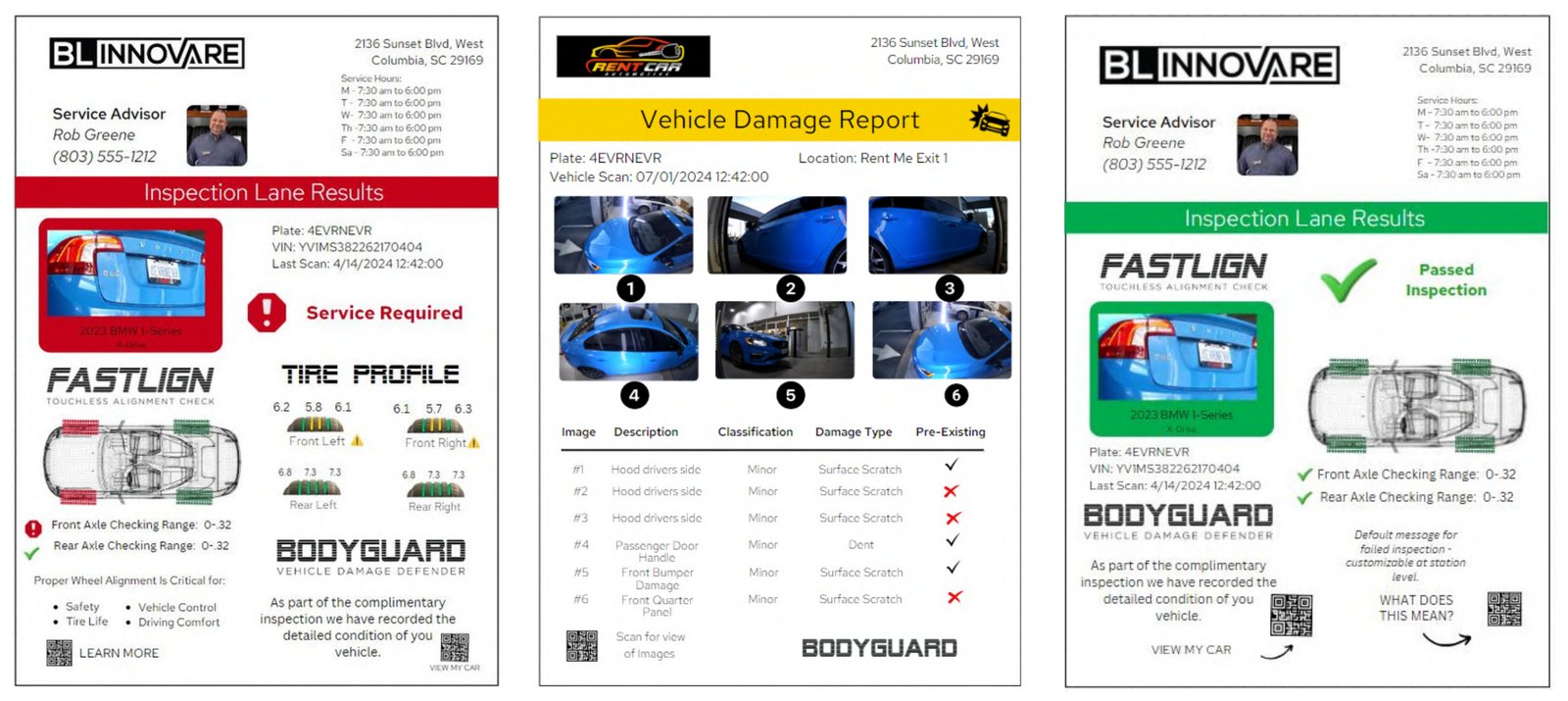
What the report shows depends on the system and the modules fitted. A BODYGUARD lane produces a damage report: numbered images of each finding, where it is on the car, the type of damage and whether it was already there. A FASTLIGN report includes all of that plus a pass, warning or fail alignment result, and modules such as the tyre tread depth scanner or undercarriage imager add their own readings. The layout can be set to suit how your advisors work, so the information they need most is at the top.
There is no standard figure for a lane, because no two sites are the same. A site assessment confirms the lane layout, the electrical and data requirements and the configuration before anything is ordered. These are the things that move the answer.
UNIPAC has operated in Australia since 2011, and the wider group has delivered workshop solutions since 1974. For an inspection lane, UNIPAC carries out the site assessment, mechanical installation, commissioning, operational testing and on-site staff training, and works with your electrician or IT contact where needed.
A lane is often part of a bigger rethink of how cars arrive and move through the workshop. If you are already looking at a faster route from the front door to the bay, an express service layout and an inspection lane are worth planning together, so the record is captured on the same path the car already takes.
It is a fixed lane of cameras and lighting that records a vehicle's condition as it drives in. The images are collected into a report for the service advisor, so the condition record exists before anyone walks around the car.
No. The capture happens as the vehicle drives through, and the inspection starts automatically on arrival. Nobody needs to stop the car or operate the system for each vehicle.
Yes, if it is a FASTLIGN lane. Alignment cannot be judged from photographs, so FASTLIGN adds a laser alignment check with a pass, warning or fail result at check-in. It cannot be added to a BODYGUARD lane later. A vehicle flagged at check-in still needs a full alignment on proper workshop equipment.
BODYGUARD records the condition of the bodywork and wheels. FASTLIGN does everything BODYGUARD does and also screens wheel alignment at check-in, which is why most service workshops with an alignment machine choose it. Optional modules such as tread depth and undercarriage scanning work with either.
Yes, with the optional tyre tread depth scanner, on either system. It measures the tread on all four tyres as the car drives in and puts the reading in the first report, so worn tyres can be raised at the desk rather than found mid-service.
Ideally yes, but not every site layout allows it. Staff can drive the car through after drop-off, and the customer can be sent a link to the report by text message within minutes.
No. It replaces the manual capture of the vehicle's condition. An advisor still reads the report, decides what to raise and explains it to the customer.
It creates a dated image of the vehicle on arrival. If damage is raised at pick-up, the advisor and the customer can both look at what the car looked like when it came in.
Indoor and outdoor configurations are available, including taller and wider versions for larger vehicles. Which suits your site is confirmed in a site assessment.
Possibly. The Privacy Act can apply to images collected by cameras, and state laws cover workplace surveillance of staff. Check the OAIC's guidance and your state's rules, and take advice if you are unsure.
The short version
A touchless inspection lane records the whole vehicle as it drives in and hands the advisor a report before the customer reaches the desk. For most service workshops FASTLIGN is the system to choose, because it adds alignment screening. The value depends on where the lane sits, who owns the report and how findings reach the quote.
Let's scope your workshop
Our engineers partner with you to design and deliver workshop environments that optimise workflow, safety and long-term performance.
Book a workshop consultation Call 1300 14 15 16
UNIPAC, 23/28 Barcoo St, Roseville NSW. 1300 14 15 16
Sources
General information only. Every workshop is different, so requirements for your site should be confirmed against the relevant Australian Standards and your state regulator, and with a qualified engineer.